X (Twitter) hashtags are a vital tool for increasing brand awareness. By mastering hashtags, which reflect real-time trends on social media, you can create posts with higher viral potential.
One marketing strategy that leverages hashtags is the "hashtag campaign." By using an official X account to encourage users to post with a specific hashtag, you can increase brand awareness and potentially boost sales. This article covers the features, benefits, and keys to a successful hashtag campaign.
What is a hashtag campaign? Overview, pros, and cons
A hashtag is a social media feature that uses the "#" symbol to create tags, such as "#keyword."
For example, creating a hashtag like "#NewProduct" when launching a new item allows you to quickly reach users looking for new releases. Conversely, users also use hashtags to search for information or post reviews. User-generated hashtags can provide branding benefits through "authentic reviews" and the sheer volume of people using the tag.
Using these hashtags for a specific promotion is called a "hashtag campaign." It works by having users post with a specific hashtag, which builds brand through User-Generated Content (UGC) and expands reach via user sharing.
Since posting with a hashtag requires effort from the user, these campaigns often offer incentives such as "X% off for hashtag posts" or "a chance for X winners to receive a gift."
Benefits of hashtag campaigns: Brand awareness and UGC
There are two main benefits to hashtag campaigns:
- Increased brand awareness
- Generating UGC
Entry requirements for hashtag campaigns usually involve posting with a specific hashtag. Since participants use the tag at least once, it spreads to all their followers, leading to greater brand awareness during the campaign period than usual.
Depending on the campaign, you can also require product reviews in addition to the hashtag. These reviews continue to contribute to sales as UGC even after the campaign ends. Hearing from many users through a campaign also helps with product planning and improvement.
Cons of hashtag campaigns: Post-campaign management
The downside of a hashtag campaign is the amount of work required after it ends.
If a hashtag campaign receives a large number of entries, selecting winners and responding to users can be very time-consuming.
To reduce the effort of tallying entries and selecting winners, we recommend using a tool. Some tools handle everything from creating campaign pages to data collection and analysis, so consider your options based on your budget.
Preparation is key to a viral hashtag campaign
Some hashtag campaigns attract far more participants than expected and become "viral."
To attract more participants and ensure success, proper preparation is essential. Here are two things you should prepare in advance:
- Set campaign objectives and goals
- Determine campaign details
Set objectives and goals: Clear goals reveal the necessary actions
Before deciding on campaign details, set your goals and objectives. Start by assessing your current situation and identifying areas that an X campaign can improve.
For example, if you know your challenges or areas for improvement, you can identify what to prioritize during the campaign.
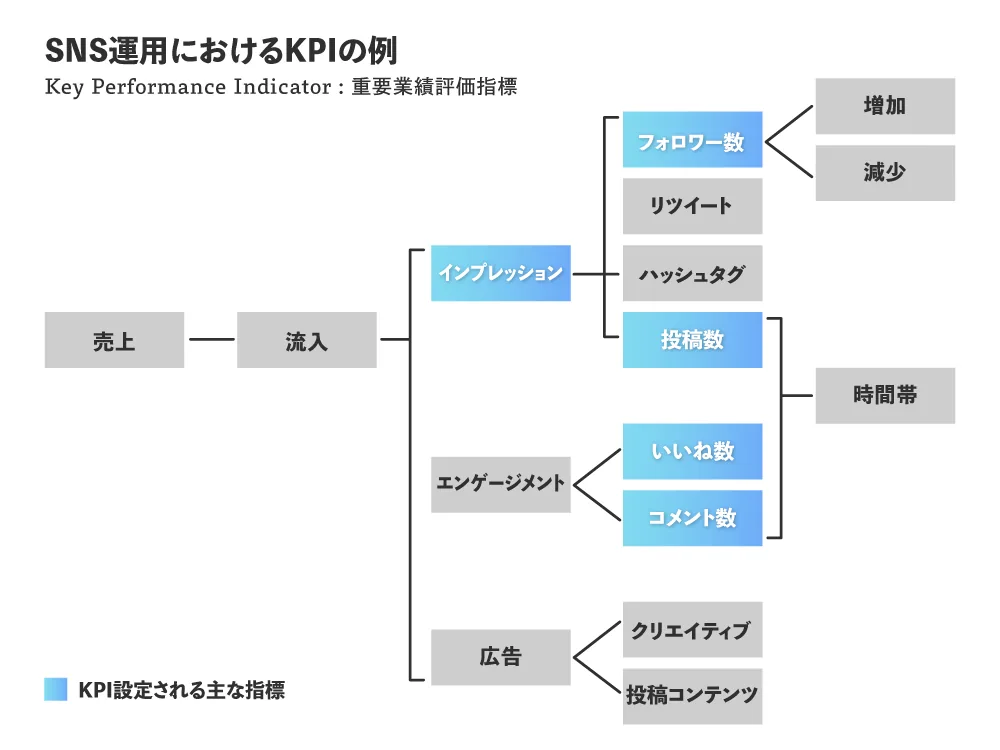
By breaking down metrics and setting KPIs (quantitative goals) aligned with your objectives, you can design campaign content specifically to improve those numbers.
Determine campaign details: Use a checklist for confirmation
When finalizing campaign details, we recommend using a checklist to ensure nothing is missed. Here are the items to decide:
- Target audience
- Entry requirements
- Campaign duration
- Prize details
- Number of winners
- Operational Structure
Refining the details for each item will help polish your campaign content.
Create posts based on successful examples: Tips and precautions
Once the campaign details are set, it's time to create the actual posts. Here, we'll look at successful examples and discuss tips and precautions.
Make it engaging: Reviewing key points from successful examples
On X, you can generate more buzz by incorporating creative elements that encourage participation.
| Objective | Tips for improvement |
| Increasing motivation to participate | Increase winning odds with hashtag posts, daily entries, or choosing between option A or B |
| Creating an easy-to-participate environment | Campaigns for specific days or seasonal events |
| Clear participation requirements | Quote RTs, Quote RTs with reviews, or RTs mentioning your favorite product |
Let's compare two successful hashtag campaign examples.
CHILLOUT ran a campaign asking users to "post about your breaks." Having users share their own opinions makes it easy to participate and creates interest in other applicants' responses.
On the other hand, the hashtag campaign by Marutomo aimed to generate reviews. By requiring photos of dishes made with the product as a condition for entry, they collected product photos along with the hashtag. These photos can be used as UGC (User Generated Content) even after the campaign ends.
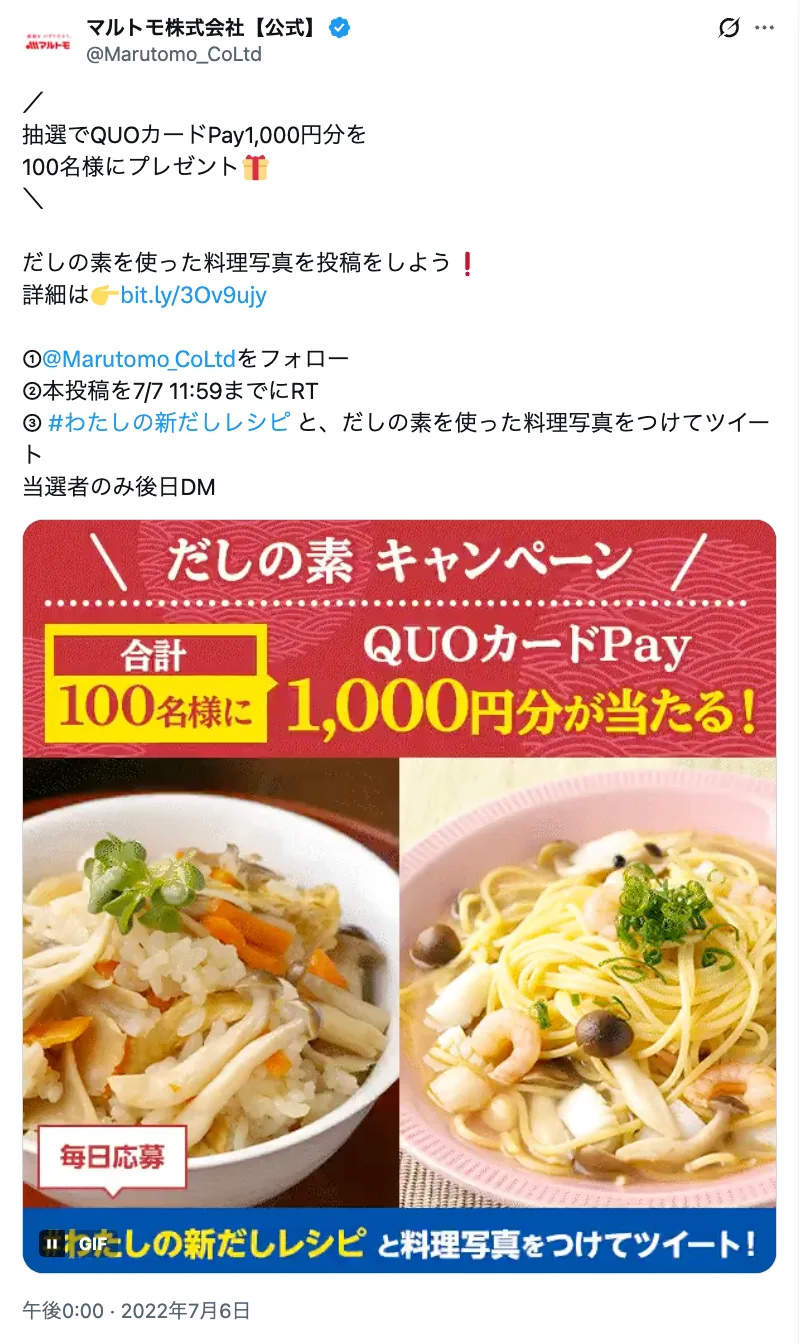
As you can see, it's important to understand that the content of a hashtag campaign changes depending on its objective.
Key points to prevent issues during a campaign
To ensure a successful campaign, troubleshooting and prevention are essential. Pay attention to the following three points.
- DM settings for handling inquiries
- Compliance with advertising laws and guidelines
- Measures against impersonator accounts
In particular, regulations such as the Act against Unjustifiable Premiums and Misleading Representations place limits on the content and value of prizes. Additionally, violating X's guidelines carries the risk of account suspension, so be sure to check the necessary procedures in advance and allow plenty of time for preparation.
Make sure to post the campaign terms and conditions where users can easily see them. Since they often exceed X's 140-character limit, consider turning the terms into an image or posting them in a thread.
Summary
In this article, we introduced the steps for planning a hashtag campaign and key points to consider for campaign content.
Preparation is key to a successful campaign. By creating easy-to-join content and setting up a system to quickly respond to winners, you can ensure the process runs smoothly without issues.
Use other companies' campaigns as a reference and try running a campaign that addresses your own business challenges.